Why Hard Water Is Quietly Destroying Your Central PA Shower (And What Actually Stops It)
Signature Bath Solutions
Providing quality bathrooms to customers in Central PA.
Hard Water and Your Shower: The Short Answer
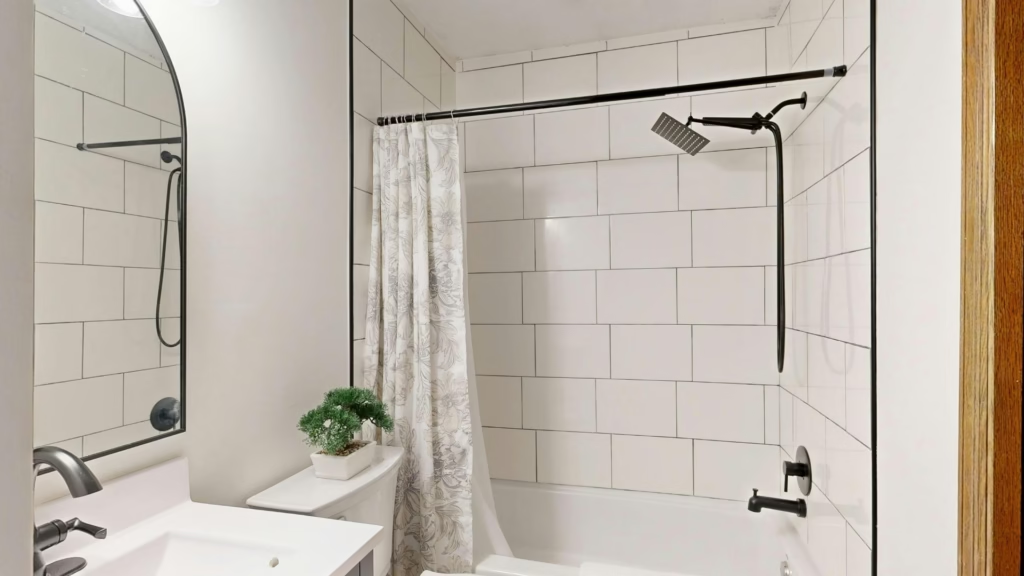
If your shower walls look chalky no matter how often you scrub, your glass door has a permanent foggy haze, and your showerhead barely sprays a steady stream anymore, hard water is almost certainly the cause. Central Pennsylvania sits on some of the most mineral-heavy water in the Mid-Atlantic, and most older showers in Lancaster, York, Cumberland, Adams, and Dauphin counties simply weren’t built to handle it. The good news: modern engineered stone wall systems, non-porous surfaces, and the right glass treatments can stop the damage almost completely — even if your municipal water never changes.
Quick Takeaway for Homeowners:
- Central PA’s limestone bedrock creates very hard to extremely hard water
- That water leaves calcium and magnesium deposits on every shower surface it touches
- Grout, porous tile, and older fiberglass are the worst offenders for trapping mineral buildup
- Non-porous, grout-free wall systems are the most effective long-term fix
- A new shower installed with hard-water-resistant materials can be completed in 1–2 days
The Limestone Belt: Why Central PA Water Is Some of the Hardest in the Mid-Atlantic
If you grew up here, you probably grew up assuming that white film on the faucet was just what water did. It isn’t. It’s what this water does.
Central Pennsylvania sits on a deep band of limestone and dolomite bedrock — geology that’s wonderful for agriculture and miserable for shower walls. As rain and groundwater move through that limestone, they dissolve enormous amounts of calcium and magnesium and carry those minerals straight into homes, whether you’re on municipal water or a private well.
How hard is the water around here? Hardness is measured in grains per gallon (GPG). Anything above 7 GPG is officially “hard,” and anything above 10.5 GPG is “very hard.”
- Lancaster County: routinely tests in the “very hard” to “extremely hard” range
- York County: consistently hard, with some areas pushing toward very hard
- Cumberland County: hard water common throughout, especially in older systems
- Dauphin and Adams counties: generally hard, with significant variation by source
- Many Central PA private wells: even harder than municipal supplies, because the water hasn’t been through any softening at all
For comparison, the Pacific Northwest typically tests under 3 GPG. So a homeowner in Mechanicsburg may be dealing with water that has five to six times the mineral load of the water hitting a shower in Seattle. Multiply that by 7 minutes a day, every day, for 10 or 15 years, and the damage becomes obvious.
This isn’t a story about water safety — calcium and magnesium aren’t harmful to drink. It’s a story about what those minerals do when they evaporate on a hard surface and leave their solids behind. Every shower you take in Central PA leaves a thin coat of dissolved rock on your walls, your glass, your fixtures, and your floor.
The question is what your shower is built to do with that coating.

What Hard Water Is Actually Doing to Your Shower Right Now
Most homeowners don’t notice hard water damage until it’s already done. It happens slowly, evenly, and on every surface at once — so there’s no obvious “before and after” moment. By the time you realize your shower looks tired, you’re often looking at a decade of accumulated mineral deposit, soap scum chemistry, and surface erosion.
Here’s what’s actually happening, in roughly the order you’ll start to see it:
1. Cloudy or Spotted Glass That Won’t Come Clean
The first thing most people notice. Glass shower doors collect a thin film of mineral residue every time water dries on them. Over time, that film etches into the glass itself — especially if cleaning products aren’t squeegeed away. Once etching has begun, you can’t polish it off. The glass looks dirty even when it’s clean.
2. White or Greenish Crust on the Showerhead
Calcium and magnesium build up inside and around the spray nozzles. Water pressure drops. The spray pattern goes lopsided. Cheap showerheads can be unscrewed and soaked in vinegar; many higher-end fixtures cannot, and the damage becomes permanent.
3. Limescale Stains on Walls and Floor
Especially visible on darker tile, glass blocks, and any surface that gets repeatedly wet and re-dried. These stains aren’t on top of the surface — they’re bonded to it. Acidic cleaners can pull off the top layer, but they often etch the surface in the process.
4. Grout That Turns Dark, Then Crumbles
Grout is one of the worst materials in a hard-water environment because it’s porous. It absorbs mineral-heavy water, dries out, absorbs again, and over time begins to break down. The dark lines aren’t always mildew — much of it is soap scum that has chemically bonded with mineral residue inside the grout itself. Once that happens, surface cleaning doesn’t reach it.
5. Soap Scum That Won’t Quit
This one is misunderstood. Soap scum isn’t dirt. It’s a chemical reaction between the fatty acids in soap and the calcium ions in your water. The harder your water, the more soap scum you’ll produce — no matter how clean you actually are. It’s why some Central PA homeowners feel like they’re cleaning constantly and still losing ground.
6. Pitted or Discolored Chrome and Nickel Finishes
Metal fixtures don’t just look dull from mineral residue. Over time, hard water can corrode the protective plating itself, leaving small pits, copper-colored spots, or a finish that wipes away when scrubbed.
7. A Tub Surround That Just Looks “Old”
This is the cumulative effect. Even if no single problem is dramatic, the combined haze, staining, and surface erosion gives the entire shower an aged appearance. New homeowners often describe it as “tired.” It’s actually mineral fatigue.
The Materials That Lose the Fight (and Why Your Old Shower Looks the Way It Does)
Not all bathroom surfaces hold up the same way against hard water. If your shower was installed before about 2010 — or if it’s a builder-grade unit from any era — there’s a good chance it’s made of materials that simply aren’t equipped for what Central PA water does.
Standard Ceramic or Porcelain Tile With Grout
A classic look, but hard water turns it into a maintenance project. The tile itself is reasonably durable, but the grout lines between tiles act like sponges, absorbing minerals and soap residue. Within a few years, those grout lines darken, crack, or pull away from the tile. Repeated re-sealing helps for a while but never reverses the underlying damage.
Natural Stone (Travertine, Marble, Some Slates)
Beautiful, but mineral-heavy water is brutal on porous natural stone. Hard water leaves calcium deposits that etch into the surface. Many homeowners who install natural stone end up sealing it two or three times a year just to keep it from staining permanently.
Older Fiberglass Tub-Shower Inserts
Common in homes built or remodeled in the 1970s, 80s, and 90s. The surface gel coat is thin and softens over time. Mineral deposits, soap scum, and microscopic abrasion from cleaning eventually wear through the gloss, leaving a chalky, never-clean appearance that can’t be polished out.
Acrylic Inserts With Visible Caulk Seams
A step up from fiberglass, but the weak point is the seams. Standard caulk traps mineral residue, harbors mildew, and discolors. Once that happens, the cosmetics of the entire shower suffer — even if the acrylic itself is fine.
Painted Drywall in the Splash Zone
Surprisingly common around tubs that double as showers in older Central PA homes. Hard water and steam break down standard paint quickly. The paint blisters, peels, and eventually exposes drywall, which then becomes a moisture and mold problem.
The honest reality: the materials in most Central PA showers built before the engineered-stone era were designed for water that was significantly softer than what comes out of the tap here. They were chosen because they were affordable and looked nice on installation day, not because they were going to hold up against limestone water for 20 years.
The Materials That Win
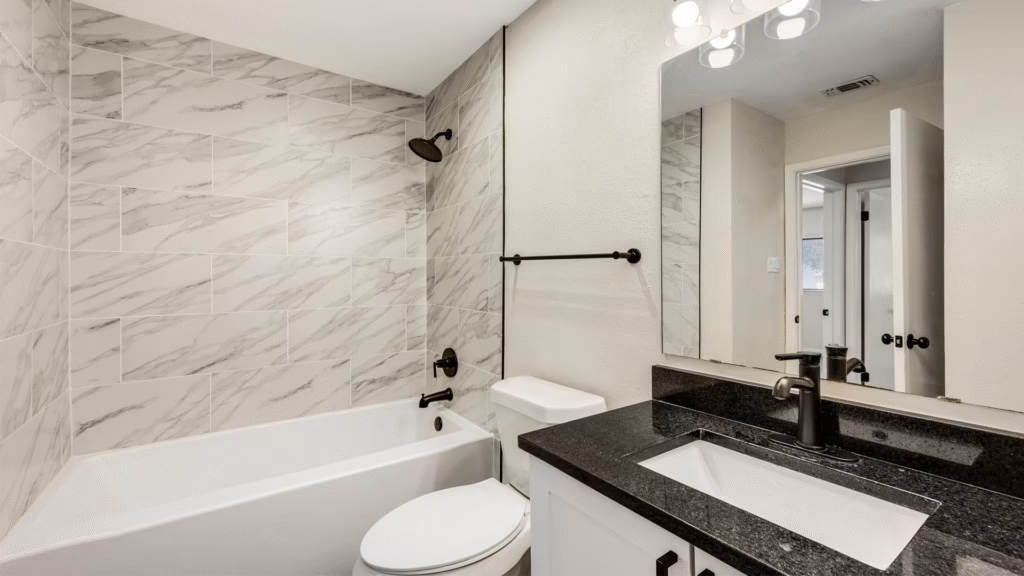
The good news is that bathroom material science has come a long way. Surfaces engineered specifically to resist mineral buildup, soap scum, and staining are now the standard for high-quality shower replacements — and they’re available at multiple price points.
Engineered Stone Wall Systems
The most effective long-term answer for hard water environments. Engineered stone combines crushed natural stone with high-density resins, producing a surface that is:
- Non-porous — minerals can’t soak in, so they can’t bond
- Stain resistant — hard water deposits wipe away rather than etching in
- Antimicrobial in many formulations — actively inhibits mildew and bacteria growth
- Crack and chip resistant — handles Pennsylvania’s freeze-thaw temperature swings well
- Grout free — installed as large panels with engineered seams, eliminating the worst hard-water failure point in older showers
For a Central PA homeowner, that grout-free design is arguably the single biggest upgrade. Removing grout from the equation removes the primary place that hard water destroys older showers.
Quality Acrylic With Modern Sealing Systems
Not the thin fiberglass of decades past. Premium acrylic surrounds today are dense, factory-finished, and installed with engineered sealing systems rather than exposed caulk. They’re a strong mid-tier option for budget-conscious upgrades and resist mineral buildup well when properly maintained.
Frameless Glass With Hydrophobic Coatings
Standard glass is hard water’s favorite victim. But modern frameless shower glass can be specified with hydrophobic coatings (sometimes called “easy-clean” or “rain-resistant” glass) that cause water to bead and roll off rather than evaporating in place. The mineral residue has less time to bond, and routine squeegeeing keeps the glass clear for years.
High-Quality Fixtures With Mineral-Resistant Finishes
Premium showerheads, valves, and handles use harder plating processes and corrosion-resistant alloys. Many top-tier fixtures also include silicone or rubber nozzles designed to be wiped clean of mineral buildup with a fingertip — a small detail that adds years of like-new performance.
Solid Surface Shower Bases
Old fiberglass bases were notorious for cracking, staining, and developing slick mineral films. Modern solid-surface bases are denser, more durable, and easier to clean, with non-slip textures molded into the surface rather than glued or coated on.
When these materials are specified together — engineered stone walls, treated glass, solid-surface base, quality fixtures — the result is a shower that simply does not look “old” in five years the way a traditional tile-and-grout setup does in Central PA.
The Hidden Cost of "Just Cleaning Harder"
A lot of homeowners try to fight hard water with harsher chemicals, more elbow grease, and more frequent scrubbing. This works for a while. It also damages the shower further.
Here’s why “just clean it more” eventually loses:
Acidic Cleaners Etch the Surfaces They’re Cleaning
CLR, lime away, even straight vinegar — these work by dissolving mineral deposits. But they don’t always stop at the deposit. On porous stone, certain acrylics, and any surface with hairline damage, repeated acid cleaning etches into the material itself. The shower starts looking permanently dull.
Abrasive Pads Scratch Protective Coatings
Scouring pads remove mineral buildup, but they also remove the manufacturer’s surface finish. Once that finish is gone, the material underneath absorbs water and soap residue much faster than before. The cycle accelerates.
Grout Sealing Is a Temporary Fix
Sealing grout helps for 6–12 months. Then it has to be done again. Over a decade, that’s 10–20 reseals — and the underlying grout still degrades.
Water Softeners Help — But Don’t Reverse Existing Damage
A whole-home water softener is genuinely worth considering for a Central PA home (the appliance and plumbing savings alone often justify it). But softer water can’t un-etch glass that’s already etched, un-stain grout that’s already absorbed mineral residue, or un-corrode fixtures that have already pitted. A softener stops new damage. It doesn’t fix old damage.
At a certain point — usually somewhere between year 12 and year 20 for a builder-grade shower in Central PA — replacement becomes cheaper, faster, and more effective than continuing to fight the existing shower.

What Central PA Homeowners Should Look For in a Hard-Water-Resistant Shower
If you’ve decided that replacement makes more sense than continued cleaning, here’s what to prioritize for our regional water conditions. Not every shower upgrade is equally well-suited to Central PA. These are the features worth specifying:
Non-Porous Wall Material
Engineered stone is the leader here, but the principle is what matters: the wall surface should not be able to absorb water or minerals. Test the question directly during your consultation. “Is this material porous? What happens if it sits wet for an hour?” A good answer will be specific, not vague.
Grout-Free Design
Large-format wall panels eliminate the single largest failure point in traditional shower construction. Even if you love the look of tile, consider tile-patterned engineered stone — same aesthetic, none of the grout maintenance.
Antimicrobial Surface Treatment
Many high-end engineered stone systems include antimicrobial agents that resist mildew and bacteria. This matters more in PA than it sounds. Our humid summers create excellent mildew conditions, and hard water provides plenty of trapped moisture and mineral residue for mildew to feed on.
Hydrophobic Glass (or No Glass)
For frameless glass enclosures, ask specifically about treated glass options. The upgrade is modest in cost and significant in long-term appearance. Alternatively, low-threshold open-entry showers eliminate glass entirely, which works beautifully for accessibility and dramatically reduces hard water visibility.
Quality Fixtures Rated for Hard Water
Many fixture manufacturers now publish hard-water performance data. Look for products with self-cleaning silicone nozzles and corrosion-resistant plating. Skip the cheapest options — fixtures are the most exposed component to hard water and the most expensive to replace later.
Drainage and Slope Done Right
This is often overlooked. A shower base that drains quickly and dries fast accumulates much less mineral residue than one that holds water for hours after each use. Proper slope and drain placement are quiet but important.
A Contractor Who Has Worked Through This Locally
Most importantly, hire someone who has installed showers in homes with Central PA water. Out-of-area contractors sometimes recommend materials that look great in showrooms but fade quickly in our actual conditions. Local experience matters here.
The Daily Habits That Help (Even With a Great Shower)
Once you have a hard-water-resistant shower installed, you’ll need far less maintenance than before. But a handful of small daily habits will keep even the best system looking new for decades:
- Squeegee the glass after each shower. Sixty seconds. The single most effective thing you can do.
- Run the bathroom fan for at least 20 minutes after every shower. Faster drying = less mineral deposit time.
- Use a mild, non-acidic cleaner weekly. Most engineered stone manufacturers publish a recommended list. Stick to those.
- Avoid bar soap when possible. Liquid body wash produces dramatically less soap scum in hard water.
- Wipe down fixtures once a week with a soft cloth. Catches mineral film before it bonds.
- Replace shower curtains and liners on schedule. Mineral-heavy water dramatically shortens their lifespan.
|
The contrast between maintaining a hard-water-resistant shower and maintaining a traditional tile-and-grout shower is significant. One takes a few minutes a week. The other can take an hour or more.

Ready for a Shower That Won't Lose to Central PA Water?
The hard water isn’t going anywhere. The limestone bedrock under Central Pennsylvania has been there for a couple hundred million years, and it’ll be there for a couple hundred million more. The question isn’t whether the water in your home is hard — it’s whether your shower is built for the water you actually have.
If your current shower is showing the signs in this article, the best next step is a free in-home consultation. You’ll get:
- An honest look at what hard water has already done to your existing shower
- Specific material recommendations for your home’s conditions
- A clear timeline and budget — most projects complete in 1–2 days
- A no-pressure walkthrough of design and financing options
Schedule Your Free In-Home Estimate with Signature Bath Solutions Today
Serving Mechanicsburg, Camp Hill, Harrisburg, Lancaster, York, Hanover, Gettysburg, Carlisle, Chambersburg, Dillsburg, Reading, and all of Central Pennsylvania.
PA HIC License 202659. Certified and fully insured installers.
Tagged: Hard Water, Shower Replacement, Engineered Stone, Central PA Bathroom Remodeling