
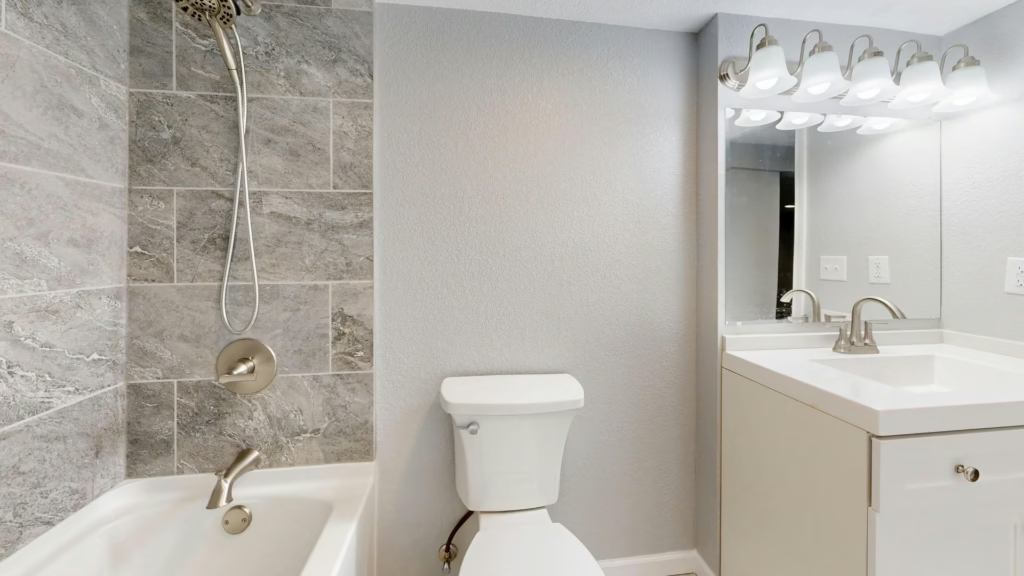
Aging in place bathroom safety is critical for Central Pennsylvania seniors who want to stay independent at home. Falls are the leading cause of injury for adults 65 and older in the United States, and more than one out of four older adults falls each year (CDC, ‘Facts About Falls | Older Adult Fall Prevention’). In 2021, falls among adults 65 and older caused over 38,000 deaths and led to millions of emergency department visits nationwide (CDC, ‘About Older Adult Fall Prevention’). Simple upgrades like grab bars, low-threshold showers, and better lighting can prevent serious injuries. Signature Bath Solutions helps Harrisburg-area homeowners create safer bathrooms with fast tub-to-shower conversions and accessibility-focused remodels.
Why Are Bathroom Falls Such a Risk for Central PA Seniors?
Falls are very common among older adults, and bathrooms are a high-risk area because of hard, wet, and slippery surfaces. Many falls happen at home, often during everyday activities like bathing or toileting rather than risky behaviors (PMC/NIH, ‘Bathroom modifications among community-dwelling older adults and the occurrence of falls’).
Research shows that 50 to 60 percent of falls among older adults occur in the home environment, and bathrooms are recognized as a common location for fall incidents (NCOA, ‘How Standards Help Us Stay Safe at Home as We Age’). Hard surfaces, wet floors, and movements like stepping over high tub walls create serious fall risks.
For Central Pennsylvania seniors in older homes throughout Harrisburg, York, Lancaster, and Carlisle, these risks are compounded by home design issues. Many older homes in areas like Harrisburg, Camp Hill, and Carlisle still have small, narrow tub-shower combos and tight doorways, which can be challenging for seniors using walkers. In two-story homes common in towns like Lancaster, York, and Lebanon, long-time homeowners often live in houses where the main full bathroom is upstairs, which increases the risk of nighttime trips on stairs plus slippery bathrooms.
Central Pennsylvania winters mean more bulky clothing, wet shoes, and potential ice at entries. When older adults hurry inside to use the restroom, slippery bathrooms become even more dangerous.
The good news is that targeted bathroom modifications can help. A study of Medicare beneficiaries with at least one fall found that 55.5 percent had bathroom modifications. However, about 40.2 percent of those with repeated falls had no bathroom modifications at all (PMC/NIH, ‘Bathroom modifications among community-dwelling older adults and the occurrence of falls’). This tells us many older adults at high fall risk still live in unmodified homes, suggesting there is a large opportunity to improve safety with targeted bathroom changes.
What Does “Aging in Place” Really Mean for Your Bathroom?
Aging in place means living safely, independently, and comfortably in your own home as you get older. For your bathroom, this means creating a space where everyday bathing and toileting routines do not come with fear of falling or needing constant assistance.
National organizations such as AARP and the National Council on Aging recommend bathroom measures like walk-in showers or tubs, grab bars, non-slip mats, handheld showerheads, and raised toilets as part of home safety checklists (NCOA, ‘How Standards Help Us Stay Safe at Home as We Age’). These recommendations provide a practical, consensus-based roadmap homeowners can follow when planning bathroom upgrades for seniors. Leading health and aging organizations emphasize that home modifications, including bathroom changes, are essential tools to mitigate fall risks and support aging in place (AARP, ‘Your Home Checklist for Aging in Place’).
In practical terms, an aging-in-place bathroom should include low or no-threshold showers that eliminate the need to step over high tub walls, which is especially helpful for seniors with balance issues, joint pain, or who use walkers (Medical News Today, ‘How to make the bathroom safer for older adults’). Grab bars securely anchored near the shower, tub, and toilet provide critical support when standing, sitting, or moving (Ironwood Manufacturing, ‘ADA Compliant Bathroom Design: Grab Bars’). Non-slip or slip-resistant flooring and surface treatments help improve traction in wet areas (AARP, ‘AARP HomeFit Guide’). Shower seating lets older adults bathe while sitting, reducing fatigue and dizziness (Comfort Keepers, ‘Keeping Seniors Safe in the Bathroom’). Better lighting including night-lights helps with nighttime bathroom trips (Johns Hopkins Aramco Healthcare, ‘Fall Prevention Tips’).
Many Central Pennsylvania families live in multigenerational households, so bathrooms often need to serve both aging parents and younger family members, blending safety features with everyday convenience.
How Can a Quick Bathroom Safety Audit Reveal Hidden Hazards?
A bathroom safety audit is a simple review of potential hazards like slippery surfaces, hard-to-reach fixtures, poor lighting, and lack of support bars. It helps homeowners identify practical changes they can make so older adults can bathe and use the toilet more safely at home (NCOA, ‘Home Safety Checklist for Aging Adults’).
You can check most items in under 60 seconds. Here is a quick checklist you can use today:
Tub and shower entry: Is there a high tub wall or step that feels difficult or unsteady to step over?
Grab points: Are there sturdy grab bars near the shower and toilet, or are you currently using towel bars or walls for support? (NCOA, ‘Home Safety Checklist for Aging Adults’)
Floor traction: Do you have non-slip mats or adhesive strips inside the tub or shower and non-skid backing under any rugs? (Johns Hopkins Aramco Healthcare, ‘Fall Prevention Tips’)
Lighting: Is the bathroom and the path to it well lit at night with a night-light or hall light? (AARP, ‘AARP HomeFit Guide’)
Toilet height: When you sit and stand from the toilet, does it feel like a strain or do you fall into the seat? (Mayo Clinic, ‘Mayo Clinic Q and A: Fall prevention’)
Reachability: Can you easily reach the shower controls and handheld showerhead from a secure standing or seated position? (Medical News Today, ‘How to make the bathroom safer for older adults’)
Clutter: Are there extra items, cords, or baskets on the floor that could catch your foot on the way to the toilet or shower? (NCOA, ‘Home Safety Checklist for Aging Adults’)
Door and threshold: Does the bathroom door open fully and is there a raised threshold or lip you catch your foot on?
Support surfaces: Do you routinely grab sink edges, towel bars, or door frames for balance instead of dedicated supports?
If you answered yes to more than two of these questions, it is time to start planning bathroom safety upgrades.
Which Bathroom Upgrades Matter Most for Aging in Place (on a Budget)?
If you are working with a limited budget, focus on upgrades that give you the biggest safety return. Practical guidance from hospital systems and medical organizations often highlights raised toilet seats, grab bars, non-slip surfaces, shower seating, and handheld showerheads as key ways to make bathrooms safer (Johns Hopkins Aramco Healthcare, ‘Fall Prevention Tips’).
Here are the most important upgrades ranked by impact and cost:
High-Impact, Lower-Cost Upgrades
Some of the quickest upgrades are adding grab bars, non-slip mats or strips in the tub or shower, brighter lighting, and a raised toilet seat. These changes do not require a full remodel and can significantly reduce day-to-day fall risk in older adults (AARP, ‘AARP HomeFit Guide’).
Grab bars are securely anchored bars designed to support body weight when entering, exiting, or moving within the bathroom (Ironwood Manufacturing, ‘ADA Compliant Bathroom Design: Grab Bars’). They help older adults with balance issues, history of falls, or difficulty standing from seated positions (PMC/NIH, ‘Bathroom modifications among community-dwelling older adults and the occurrence of falls’).
General guidance suggests installing grab bars near the toilet and in the tub or shower area where people naturally reach for support. Placement and mounting should follow applicable accessibility standards and be confirmed with a licensed professional for each home (Ironwood Manufacturing, ‘ADA Compliant Bathroom Design: Grab Bars’). Accessibility standards provide recommended heights and load requirements for grab bars. For example, many standards cite mounting heights of about 33 to 36 inches. However, homeowners should confirm details with a licensed professional for their situation (Ironwood Manufacturing, ‘ADA Compliant Bathroom Design: Grab Bars’).
Common pitfalls include relying on towel bars or suction-cup devices, installing into drywall without adequate backing, or placing bars where they are hard to reach (Ironwood Manufacturing, ‘ADA Compliant Bathroom Design: Grab Bars’).
Non-slip surfaces include flooring materials or treatments that provide better traction when wet, such as textured tile, non-slip vinyl, or adhesive strips and mats in tubs and showers (AARP, ‘AARP HomeFit Guide’). These help all seniors, especially those with prior slips, balance issues, or who rush to the bathroom at night (Johns Hopkins Aramco Healthcare, ‘Fall Prevention Tips’). Common pitfalls include using loose rugs without non-slip backing, relying on worn bath mats, or choosing shiny, slick tile without added traction (AARP, ‘AARP HomeFit Guide’).
Better lighting means brighter, evenly distributed lighting plus night-lights or motion-activated lights for safe nighttime bathroom trips (Johns Hopkins Aramco Healthcare, ‘Fall Prevention Tips’). Better visibility helps older adults with reduced vision navigate more safely and may reduce the chance of missteps or trips. Older adults with vision changes or those who frequently use the bathroom at night benefit most from these upgrades (AARP, ‘AARP HomeFit Guide’).
Raised toilet seats or comfort-height toilets reduce the distance a person must bend to sit and stand (NCOA, ‘Home Safety Checklist for Aging Adults’). Raised toilets and toilet seats reduce the distance an older adult has to bend and stand, which can make transfers more stable and comfortable. This can be especially helpful for people with arthritis, leg weakness, or balance challenges (Mayo Clinic, ‘Mayo Clinic Q and A: Fall prevention’).
Medium-Investment Upgrades
Handheld showerheads are showerheads on a flexible hose, often on a sliding bar, that can be used while sitting or standing (Mayo Clinic, ‘Mayo Clinic Q and A: Fall prevention’). These help seniors who use seating, have limited reach, or need assistance from a caregiver (AARP, ‘Your Home Checklist for Aging in Place’).
Shower seating includes a built-in bench or a sturdy, stable shower chair that lets users sit while bathing and reduces standing time (Comfort Keepers, ‘Keeping Seniors Safe in the Bathroom’). This is especially helpful for older adults who tire easily, experience dizziness, or use mobility aids, as well as caregivers assisting with bathing (Comfort Keepers, ‘Keeping Seniors Safe in the Bathroom’). Common pitfalls include using unstable chairs not designed for wet environments and placing seating where water and controls are hard to reach (Comfort Keepers, ‘Keeping Seniors Safe in the Bathroom’).
Higher-Impact, Larger-Investment Upgrades
Tub-to-shower conversions involve replacing a traditional bathtub with a walk-in or low-threshold shower, often using a shower base and new wall system (AARP, ‘Your Home Checklist for Aging in Place’). This helps older adults who no longer soak in the tub and struggle to step over high tub walls (Mayo Clinic, ‘Mayo Clinic Q and A: Fall prevention’).
Walk-in tubs are deep tubs with a side door and built-in seating, designed so users step over a lower threshold and sit while bathing (Medical News Today, ‘How to make the bathroom safer for older adults’). These help seniors who value soaking for comfort or routine and can manage stepping into and out of the tub with the door (NCOA, ‘Home Safety Checklist for Aging Adults’). Common pitfalls include underestimating fill and drain time, water use, or the need to sit while the tub fills and empties, and not matching door swing and space to the user’s mobility (NCOA, ‘Home Safety Checklist for Aging Adults’).
You do not have to do everything at once. Start with one or two changes and build from there.
How Do Low-Threshold Walk-In Showers Improve Safety for Older Adults?
A low-threshold walk-in shower is a shower with a very low step-in height or a curbless design that minimizes the need to lift feet high to enter (Medical News Today, ‘How to make the bathroom safer for older adults’). For seniors with balance challenges, joint pain, or who use walkers or shower chairs, this design change can be life-changing (Medical News Today, ‘How to make the bathroom safer for older adults’).
Walk-in showers with low or no thresholds are generally easier to enter and exit than traditional tubs, especially for people with balance or mobility issues (Medical News Today, ‘How to make the bathroom safer for older adults’). When paired with grab bars, non-slip flooring, and a shower seat, they can greatly reduce slip and trip hazards for older adults (Medical News Today, ‘How to make the bathroom safer for older adults’).
Traditional bathtubs require stepping over high tub walls. For an older adult with arthritis, reduced flexibility, or a history of falls, that step becomes a major obstacle and a daily fall risk. Walk-in showers eliminate that barrier entirely.
Key benefits include easier and safer entry where seniors do not have to lift their legs high or balance on one foot while stepping over a wall. Walkers, canes, and shower chairs can move in and out of the shower easily. Low-threshold showers work best when combined with grab bars, non-slip flooring, built-in seating, and handheld showerheads. If a family member or aide helps with bathing, a walk-in shower makes assistance easier and safer for everyone.
Common pitfalls to avoid include not combining the low threshold with non-slip flooring, seating, and grab bars, or assuming low entry alone solves fall risk (NCOA, ‘Home Safety Checklist for Aging Adults’). Also plan for proper water containment and drainage to avoid creating new hazards.
Many Central Pennsylvania homes have partially finished basements with older bathrooms that may be dimly lit, have low ceilings, and dated fixtures, all of which can increase fall risks for seniors. A tub-to-shower conversion addresses these challenges directly.
Are Walk-In Tubs a Good Idea for My Parent?
Walk-in tubs can be helpful for some seniors, but they are not the right fit for everyone. A walk-in tub is a deep tub with a side door and built-in seating, designed so users step over a lower threshold and sit while bathing (Medical News Today, ‘How to make the bathroom safer for older adults’).
Walk-in tubs provide a door and built-in seating so older adults can bathe without stepping over a tall tub wall, which may reduce fall risk for some users (AARP, ‘Your Home Checklist for Aging in Place’). They can be helpful for people who prefer soaking but still need to follow manufacturer and safety guidance when entering, exiting, and using them (AARP, ‘Your Home Checklist for Aging in Place’).
Walk-in tubs work well for seniors who value soaking for comfort or routine and can manage stepping into and out of the tub with the door (NCOA, ‘Home Safety Checklist for Aging Adults’). They also work for those who have adequate hot water capacity and drainage in their home and do not mind sitting while the tub fills and empties, which can take several minutes.
Important Considerations
Fill and drain time is a major consideration. You must sit in the tub while it fills before bathing and while it drains after bathing. For some seniors, this waiting period can be uncomfortable, especially in cooler bathrooms.
Water use is another factor. Walk-in tubs typically hold more water than standard tubs, which can increase utility costs and require a robust hot water heater.
Space and door swing must be planned carefully. The tub door needs clearance to open, and the bathroom layout must accommodate safe entry and emergency access if needed.
Costs vary widely by region, materials, and home condition. Homeowners should get multiple local quotes and ask what is included (PMC/NIH, ‘Bathroom modifications among community-dwelling older adults and the occurrence of falls’). Walk-in tubs can be more expensive upfront. Pricing depends on features and installation complexity, so homeowners should compare options carefully (PMC/NIH, ‘Bathroom modifications among community-dwelling older adults and the occurrence of falls’).
Walk-In Shower vs. Walk-In Tub: How to Choose
Choosing between a walk-in shower and walk-in tub often comes down to mobility and personal bathing preference. Seniors who mainly shower, use walkers, or need caregiver assistance may find a low-threshold walk-in shower with seating and grab bars more practical, while those who value soaking and can manage the entry and exit routine of a walk-in tub may prefer that option (Medical News Today, ‘How to make the bathroom safer for older adults’).
Walk-in showers are best for seniors who primarily shower, use walkers or chairs, or need quick, easy access. The pros include low or no threshold and easier entry. They work well with seats and grab bars and are good for tight spaces and caregivers (AARP, ‘Your Home Checklist for Aging in Place’). The cons include being less suited to those who prefer baths. Water can splash without proper design and they may require careful planning in very small baths (AARP, ‘Your Home Checklist for Aging in Place’). Maintenance is typically straightforward cleaning, especially with non-porous wall panels and bases, and there are fewer crevices than older tile (AARP, ‘Your Home Checklist for Aging in Place’). Typical install considerations may involve tub-to-shower conversion, drain adjustments, and adding grab bars and seating. Planning for water containment and slope is important (AARP, ‘Your Home Checklist for Aging in Place’).
Walk-in tubs are best for seniors who enjoy soaking and can safely manage entering and exiting the tub. The pros include a built-in seat and door, which allows soaking while seated and can be reassuring for people who dislike standing in water (AARP, ‘Your Home Checklist for Aging in Place’). The cons include requiring time to fill and drain while seated, higher water use, and not being ideal for every mobility level or layout (AARP, ‘Your Home Checklist for Aging in Place’). Maintenance involves more mechanical parts such as door seals and jets in some models, and requires regular cleaning and following manufacturer directions (AARP, ‘Your Home Checklist for Aging in Place’). Typical install considerations include needing adequate floor structure, hot water capacity, and door clearance. Space planning for entry and emergency access is important (AARP, ‘Your Home Checklist for Aging in Place’).
Where Should Grab Bars, Seating, and Non-Slip Surfaces Go in a Senior-Friendly Bathroom?
Proper placement of safety features is as important as installing them. Here is where each upgrade should go for maximum safety and usability.
Grab Bars
Grab bars are securely anchored bars designed to support body weight when entering, exiting, or moving within the bathroom (Ironwood Manufacturing, ‘ADA Compliant Bathroom Design: Grab Bars’). They help older adults with balance issues, history of falls, or difficulty standing from seated positions (PMC/NIH, ‘Bathroom modifications among community-dwelling older adults and the occurrence of falls’).
General guidance suggests installing grab bars near the toilet and in the tub or shower area where people naturally reach for support. Placement and mounting should follow applicable accessibility standards and be confirmed with a licensed professional for each home (Ironwood Manufacturing, ‘ADA Compliant Bathroom Design: Grab Bars’).
Recommended placement includes inside the shower or tub on the wall opposite the showerhead for support while standing and rinsing. Also consider vertical grab bars near the entry for leverage when stepping in and out. Install horizontal grab bars on the wall beside the toilet to help with sitting and standing transfers.
Common pitfalls to avoid include relying on towel bars or suction-cup devices, installing into drywall without adequate backing, or placing bars where they are hard to reach (Ironwood Manufacturing, ‘ADA Compliant Bathroom Design: Grab Bars’).
Shower Seating
A built-in bench or sturdy, stable shower chair lets users sit while bathing and reduces standing time (Comfort Keepers, ‘Keeping Seniors Safe in the Bathroom’). This is especially helpful for older adults who tire easily, experience dizziness, or use mobility aids, as well as caregivers assisting with bathing (Comfort Keepers, ‘Keeping Seniors Safe in the Bathroom’).
Recommended placement includes positioning the seat along the back or side wall of the shower where water and shower controls are within easy reach while seated. Most shower seats are 17 to 19 inches high, similar to a standard chair (Comfort Keepers, ‘Keeping Seniors Safe in the Bathroom’).
Common pitfalls to avoid include using unstable chairs not designed for wet environments and placing seating where water and controls are hard to reach (Comfort Keepers, ‘Keeping Seniors Safe in the Bathroom’).
Non-Slip Flooring and Surfaces
Non-slip or slip-resistant flooring and surface treatments help improve traction in wet areas (AARP, ‘AARP HomeFit Guide’). Options include textured tile, non-slip vinyl, or applying strips and mats in tubs and showers to reduce the chance of slipping (AARP, ‘AARP HomeFit Guide’).
Recommended placement includes throughout the entire bathroom floor. Avoid shiny, slick tile without added traction. Inside tubs and showers, use adhesive non-slip strips or a textured shower base. Under all bath rugs and mats, ensure they have non-slip backing and replace worn mats immediately (AARP, ‘AARP HomeFit Guide’).
How Can Lighting and Toilet Height Make Everyday Routines Safer?
Two of the simplest but most impactful bathroom safety upgrades are better lighting and comfortable toilet height.
Lighting Improvements
Brighter, evenly distributed lighting plus night-lights or motion-activated lights can make it easier to see wet spots, thresholds, and obstacles during nighttime bathroom trips (Johns Hopkins Aramco Healthcare, ‘Fall Prevention Tips’). Better visibility helps older adults with reduced vision navigate more safely and may reduce the chance of missteps or trips.
Older adults with vision changes or those who frequently use the bathroom at night benefit most from these upgrades (AARP, ‘AARP HomeFit Guide’). Do not rely only on overhead lighting that casts shadows, and do not skip night-lights in hallways and near stairs leading to bathrooms.
What to upgrade includes overhead lighting by replacing dim bulbs with brighter LED bulbs and considering adding a second light fixture if the bathroom is large or has shadows. Install plug-in or battery-operated night-lights in the bathroom and along hallways leading to the bathroom. Motion-activated lights turn on automatically when someone enters the bathroom, eliminating the need to fumble for a switch in the dark.
Comfort-Height Toilets
Toilets or toilet risers that raise the seat height reduce the distance a person must bend to sit and stand (NCOA, ‘Home Safety Checklist for Aging Adults’). This can make transfers more stable and comfortable for seniors with arthritis, joint pain, or leg weakness, as well as people who struggle to get up from low seats (Mayo Clinic, ‘Mayo Clinic Q and A: Fall prevention’).
Raised toilets and toilet seats reduce the distance an older adult has to bend and stand, which can make transfers more stable and comfortable. This can be especially helpful for people with arthritis, leg weakness, or balance challenges (Mayo Clinic, ‘Mayo Clinic Q and A: Fall prevention’).
What to upgrade includes comfort-height toilets, which sit about 17 to 19 inches high compared to standard 15-inch toilets and are sometimes called ADA-height or chair-height toilets (NCOA, ‘Home Safety Checklist for Aging Adults’). If replacing the toilet is not an option, a toilet seat riser can add 2 to 4 inches of height affordably (NCOA, ‘Home Safety Checklist for Aging Adults’). Grab bars or armrests should be paired with toilet height upgrades for additional support during transfers (AARP, ‘Your Home Checklist for Aging in Place’).
Choosing a seat height that is too high or too low for the user can be counterproductive, so test the height before committing (NCOA, ‘Home Safety Checklist for Aging Adults’). Adding nearby grab bars makes the upgrade even more effective.
What Special Bathroom Challenges Do Older Central PA Homes Create?
If you live in Harrisburg, Camp Hill, Carlisle, Lancaster, York, or surrounding Central Pennsylvania communities, your home may have bathroom features that make aging in place more challenging.
Many older homes in areas like Harrisburg, Camp Hill, and Carlisle still have small, narrow tub-shower combos and tight doorways, which can be challenging for seniors using walkers. In two-story homes common in towns like Lancaster, York, and Lebanon, long-time homeowners often live in houses where the main full bathroom is upstairs, which increases the risk of nighttime trips on stairs plus slippery bathrooms.
Many Central Pennsylvania homes have partially finished basements with older bathrooms that may be dimly lit, have low ceilings, and dated fixtures, all of which can increase fall risks for seniors.
Multigenerational living is common in parts of Central Pennsylvania, so bathrooms often need to serve both aging parents and younger family members, blending safety features with everyday convenience.
Central Pennsylvania winters mean more bulky clothing, wet shoes, and potential ice at entries. When older adults hurry inside to use the restroom, slippery bathrooms become even more dangerous.
These challenges are not insurmountable. A bathroom remodeling company familiar with Central Pennsylvania homes like Signature Bath Solutions can help you navigate tight spaces, outdated layouts, and budget constraints to create a safer, more accessible bathroom.
FAQs
Q: What is the first bathroom safety upgrade I should make for an aging parent?
A: Some of the quickest upgrades are adding grab bars, non-slip mats or strips in the tub or shower, brighter lighting, and a raised toilet seat. These changes do not require a full remodel and can significantly reduce day-to-day fall risk in older adults (AARP, ‘AARP HomeFit Guide’). Pair grab bars with non-slip mats or strips in wet areas for maximum impact.
Q: Can simple changes really reduce the risk of falls in the bathroom?
A: Yes. Research indicates that targeted home modifications, including bathroom upgrades, can help mitigate hazards that contribute to falls in older adults (PMC/NIH, ‘Bathroom modifications among community-dwelling older adults and the occurrence of falls’). Modifications work best when they are tailored to a person’s physical limitations and daily routines. Even adding grab bars, better lighting, and non-slip surfaces can make a measurable difference.
Q: Do I need a full remodel to make my bathroom safer for aging in place?
A: Not usually. Some of the quickest upgrades are adding grab bars, non-slip mats or strips in the tub or shower, brighter lighting, and a raised toilet seat. These changes do not require a full remodel (AARP, ‘AARP HomeFit Guide’). For larger changes like tub-to-shower conversions, professionals familiar with aging-in-place design can help ensure features are installed securely and appropriately (NCOA, ‘How Standards Help Us Stay Safe at Home as We Age’).
Q: How do I talk to my parents about bathroom safety without scaring them?
A: Focus on independence and comfort rather than fear. Emphasize that bathroom upgrades help them stay in the home they love longer and reduce daily strain, not just prevent falls. Adult children can look for high tub walls, lack of grab bars, poor lighting, loose mats, and difficulty getting on and off the toilet (AARP, ‘AARP HomeFit Guide’). These signs can indicate it is time for simple modifications or a larger bathroom remodel to support aging in place.
Q: How often should we review our bathroom for new safety issues?
A: At least once a year, or anytime there is a change in mobility, balance, or health. Falls risks can increase gradually, so regular check-ins help you catch hazards before they cause an accident. A bathroom safety audit is a simple review homeowners can use to identify practical changes (NCOA, ‘Home Safety Checklist for Aging Adults’).
Your Next Step: Schedule a Free Bathroom Safety Consultation in Central PA
Making your bathroom safer for aging in place does not have to be overwhelming or expensive. Whether you are considering grab bars and better lighting or ready to explore a tub-to-shower conversion, the right upgrades can help you or your loved ones stay safe, independent, and comfortable at home for years to come.
Signature Bath Solutions specializes in accessible bathroom remodels for Central Pennsylvania homeowners in Harrisburg, Camp Hill, Carlisle, and surrounding communities. Our expert team uses premium, low-maintenance materials including engineered stone surrounds and slip-resistant flooring. We complete most tub-to-shower conversions in just one to two days, so you get a safer bathroom without weeks of disruption.
2026 SAVINGS! Up To $2,000 Off Your New Bath or Shower. A tub-to-shower conversion is often one of the fastest and most effective first safety upgrades you can make, eliminating the high tub wall that causes so many falls and creating a more accessible bathing space.
Schedule Your Free Design Quote and let us create a bathroom that supports your independence and peace of mind.